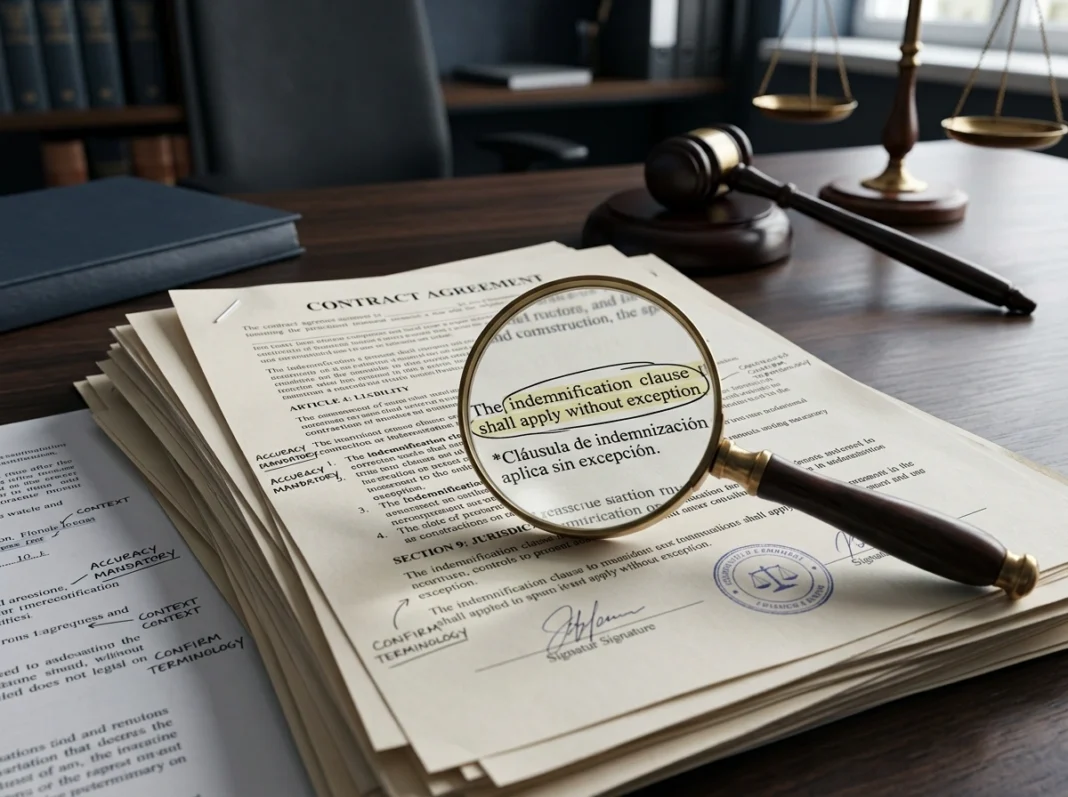
Legal documents form the foundation of our personal and professional lives. They govern business agreements, validate immigration statuses, and ensure personal rights are protected in a court of law. As people and businesses increasingly operate across international borders, the demand for translating these critical documents continues to grow.
When you submit a foreign-language document to a government agency, court, or academic institution, a simple rough translation will not suffice. Authorities require an exact, certified rendering of the original text. This is because the legal system relies entirely on precise language. A single misunderstood word can alter the terms of a contract, delay an immigration process, or change the outcome of a court case.
Navigating the complexities of legal terminology requires highly specialized skills. Translating a birth certificate for a visa application or a corporate contract for an international merger involves strict formatting and certification standards. Organizations like the United States Citizenship and Immigration Services (USCIS) mandate that translated documents meet specific legal criteria to be considered valid.
Understanding the strict requirements of legal translation can help you avoid costly delays and legal disputes. By recognizing the critical need for precision, you can ensure your documents are accepted by the necessary authorities without hesitation.
The Legal Implications of Translation Errors
The legal field leaves no room for ambiguity. Laws and regulations are written with highly specific terminology, and legal documents are drafted to reflect exact intentions and obligations. When translating these texts into another language, the translator must preserve the original legal meaning with absolute fidelity.
Translation errors in a legal context often carry severe consequences. If a translator misinterprets a clause in a business contract, the resulting document might impose unintended liabilities on one of the parties. In immigration cases, an improperly translated marriage certificate or police record can lead authorities to suspect fraud. This often results in the immediate denial of a visa or green card application.
Government agencies like USCIS have strict rules regarding foreign-language submissions. Under 8 CFR 103.2(b)(3), any document containing foreign language submitted to USCIS must be accompanied by a full English language translation. The translator must certify that the translation is complete and accurate, and that they are competent to translate from the foreign language into English. Failing to meet these specific legal standards renders the document invalid, forcing applicants to restart lengthy and expensive processes.
Key Components of Accuracy in Legal Documents
Achieving total accuracy in legal translation goes far beyond simply swapping words from one language to another. A precise translation requires a deep understanding of several critical components.
Precise Legal Terminology
Every legal system has its own unique vocabulary. A legal concept in one country might not have a direct equivalent in another. Translators must find the exact legal equivalent in the target language to ensure the document holds the same legal weight. Using a general dictionary definition instead of a specific legal term can completely change the document’s meaning.
Strict Formatting and Syntax
Legal documents often follow rigid formatting structures. Courts and government agencies expect translations to mirror the visual layout of the original document. This includes the placement of signatures, stamps, seals, and paragraph numbering. Maintaining this visual consistency helps officials cross-reference the translation with the original document quickly and efficiently.
Cultural and Jurisdictional Context
Laws are deeply rooted in the culture and history of their respective regions. Professional legal translators must understand the jurisdictional context of both the source and target languages. They must adapt the text so that it makes sense under the legal framework of the receiving country, without altering the original facts.
The Role of Professional Translators in Ensuring Precision
Bilingualism is a valuable skill, but speaking two languages fluently does not make someone qualified to translate legal documents. Professional legal translation requires rigorous training, subject matter expertise, and a thorough understanding of legal systems.
Professional translators possess the technical knowledge needed to navigate complex documents like court depositions, articles of incorporation, and academic transcripts. They understand the specific requirements of the organizations receiving the documents. For example, a translator working on a college admission file knows exactly how to format a foreign academic transcript for U.S. credential evaluation boards.
Furthermore, professional translation providers offer certification. A certified translation includes a signed and dated Certificate of Accuracy. This certificate acts as a legal guarantee that the translation is a true and accurate rendering of the original document. Many professionals are also members of industry organizations, such as the American Translators Association (ATA), which highlights their commitment to high ethical and quality standards.
Consequences of Inaccurate Legal Translations
The risks associated with poor translation are simply too high for individuals and businesses to ignore. Choosing an unqualified translator or relying on automated translation software can lead to a cascade of negative outcomes.
Financial Losses
In the corporate world, time is money. If a patent application or a real estate contract is rejected due to a translation error, the business can lose critical opportunities. Fixing these mistakes often requires hiring a new translator, paying legal fees to amend contracts, and covering the costs of delayed projects.
Rejected Immigration Applications
Immigration processes are notoriously long and complex. USCIS and foreign consulates process millions of applications annually. If a birth certificate or divorce decree contains a translation error, the agency will likely issue a Request for Evidence (RFE) or deny the application outright. This forces the applicant to pay additional filing fees and wait months or even years for a resolution.
Court Dismissals and Legal Disputes
In civil and criminal courts, translated documents are often submitted as evidence. If the opposing legal counsel discovers an inaccuracy in a translated deposition or police report, they can move to have the evidence dismissed. This can fatally weaken a legal case, leading to lost lawsuits and unjust verdicts.
Best Practices for Obtaining an Official Translation
Securing an accurate translation requires careful planning and vetting. By following a few best practices, you can ensure your legal documents meet all necessary requirements.
Verify Certification Requirements
Before hiring a translator, check the specific requirements of the receiving institution. USCIS requires a standard certified translation. However, civil courts, the Department of Motor Vehicles (DMV), and certain banks might require a notarized translation. If you are submitting documents internationally, you may also need an apostille authentication to comply with the Hague Convention.
Look for Transparent Pricing and Processes
Reputable translation companies offer clear, upfront pricing. Look for providers that charge a flat rate per page rather than complex hourly or per-word fees. For instance, some leading providers charge a flat rate of $29.95 per page, which helps you budget accurately for your legal needs. You should also look for a secure upload portal to protect your sensitive legal documents.
Choose Experienced Professionals
Always verify the credentials of the translation provider. When you need an official translation, ensure the provider offers a signed Certificate of Accuracy. Check if they have a proven track record of acceptance by government agencies, courts, and universities. Selecting a company with extensive experience and ATA membership gives you the peace of mind that your documents are in capable hands.
Securing Your Legal Documents for the Future
Submitting legal documents is often a stressful experience, particularly when those documents are in a foreign language. The success of a business merger, a university application, or a family’s immigration journey heavily depends on the precision of the translated paperwork.
Accuracy in legal translation is an absolute necessity. By understanding the strict requirements of government agencies and legal institutions, you can avoid common pitfalls that lead to rejections and financial loss. Always prioritize professional, certified translators who understand the nuances of legal terminology and formatting. Taking the time to secure a high-quality translation will protect your rights, streamline your administrative processes, and ensure your legal documents are accepted without question.