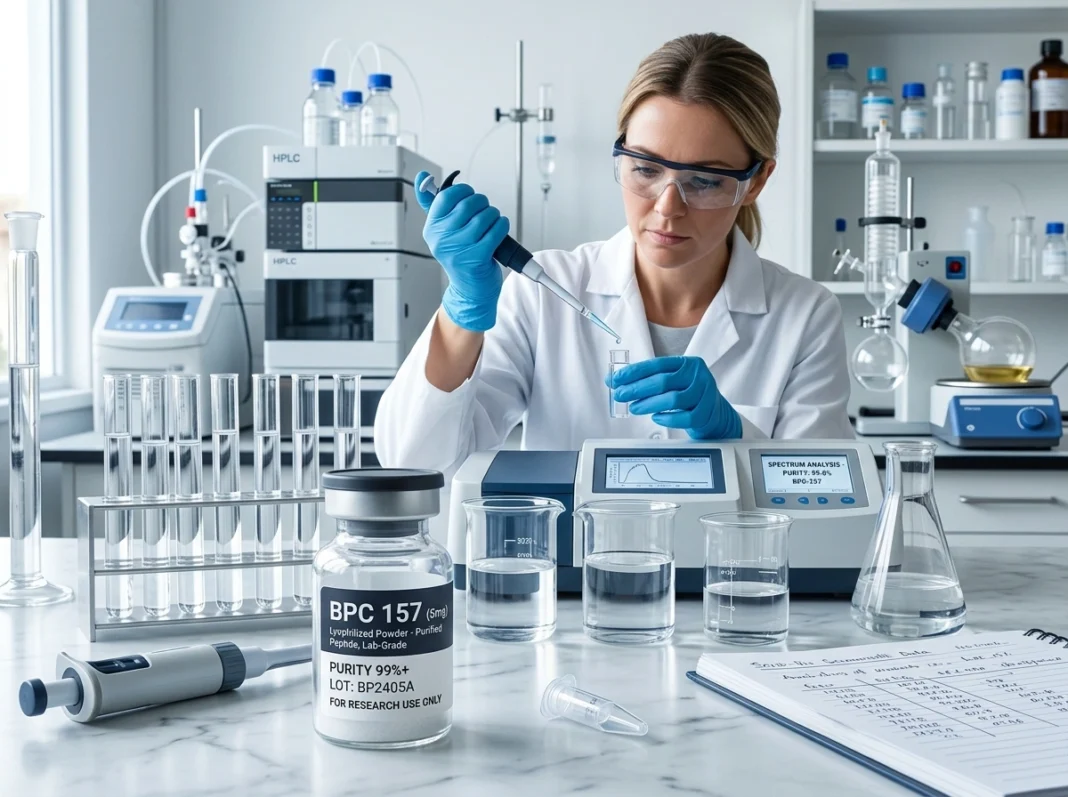
When it comes to research peptides, not all products are created equal. BPC 157 has gained significant attention for its potential applications, but the value of any peptide depends entirely on one factor: purity. A high-quality compound delivers reliable results, while a poorly made one can be inconsistent at best and unsafe at worst.
If you plan to purchase BPC 157, knowing how to assess quality before you buy is essential. This guide walks you through what BPC 157 is, why purity matters, and the practical steps you can take to identify a trustworthy product.
What Is BPC 157?
BPC 157, short for Body Protection Compound 157, is a synthetic peptide derived from a protein found in gastric juice. Researchers have studied it for its potential role in tissue repair, cellular regeneration, and recovery-related processes. It is most commonly available in lyophilized (freeze-dried) powder form, intended for research purposes.
Because BPC 157 is a peptide built from a specific sequence of amino acids, even small manufacturing errors can change its structure. A flawed synthesis process can produce incomplete chains, leftover byproducts, or contaminants. That’s why the manufacturing quality behind the product matters just as much as the peptide itself.
Why Purity Is So Important
Purity refers to how much of the product is the actual target peptide versus other substances. A peptide marketed as “BPC 157” might only contain 80% of the intended compound, with the rest made up of impurities, fragments, or residual solvents.
Here’s why this matters:
- Consistency: Higher purity means more predictable, repeatable results in any research setting.
- Reliability: Impurities can interfere with outcomes, making it hard to trust your findings.
- Safety: Contaminants such as bacterial residue, heavy metals, or chemical byproducts pose real risks.
- Value: Paying for a low-purity product means you’re paying for filler rather than the compound you actually want.
In short, purity is the difference between a dependable research tool and an unreliable one. Before you spend your money, you deserve to know exactly what you’re getting.
Key Indicators of High-Quality BPC 157
Reputable suppliers make it easy to verify their products. Look for the following markers of quality.
1. Third-Party Testing
Independent lab testing is the gold standard. When a supplier sends samples to an outside laboratory, it removes any conflict of interest. The lab has no reason to inflate the results, so the data you receive reflects the true composition of the product.
Always favor vendors who use accredited third-party labs over those who rely solely on in-house testing. Self-reported numbers can be accurate, but external verification adds an important layer of trust.
2. Certificate of Analysis (COA)
A Certificate of Analysis is a document that details the test results for a specific batch. A complete COA should include:
- The peptide name and sequence
- The batch or lot number
- The measured purity percentage
- The testing methods used
- The date of testing
If a supplier cannot provide a COA, treat that as a major warning sign. Quality vendors are proud of their testing and share it freely. The batch number on the COA should also match the product you receive, so you can confirm the documentation is genuine and current.
3. HPLC Purity Levels
High-Performance Liquid Chromatography (HPLC) is the most common method for measuring peptide purity. It separates the components of a sample and shows what percentage is the target peptide.
For research-grade BPC 157, look for purity levels of 98% or higher. Anything below 95% should give you pause. The HPLC chromatogram, which is a visual graph of the results, should show one dominant, clean peak with minimal additional peaks that would indicate impurities.
4. Mass Spectrometry Confirmation
Some top-tier suppliers also include mass spectrometry (MS) data. This confirms the molecular weight of the peptide, verifying that the structure matches what BPC 157 should be. When you see both HPLC and MS data, you can be confident the product is correctly identified and pure.
Red Flags to Watch For
Just as there are signs of quality, there are warning signs of trouble. Steer clear of suppliers who show any of the following.
- No testing documentation. If there’s no COA or lab report, you have no proof of what you’re buying.
- Vague product descriptions. Missing details about purity, sequence, or batch numbers suggest a lack of transparency.
- Prices that seem too good to be true. Quality peptide production is expensive. Suspiciously low prices often mean cut corners.
- Poor storage and shipping practices. Peptides are sensitive. Products shipped without proper cold packaging may degrade before they reach you.
- No clear contact information. Reputable companies provide ways to reach them and answer questions about their products.
- Stock photos and recycled COAs. Some sellers reuse the same lab report for every batch. Always check that the documentation matches your specific order.
Tips for Sourcing From Reputable Vendors
Finding a trustworthy supplier takes a little research, but the effort pays off. Use these tips to guide your search.
- Read independent reviews. Look beyond the testimonials on the seller’s own website. Forums and community discussions often reveal honest experiences.
- Ask for batch-specific COAs. Don’t settle for a generic document. Request the report tied to the exact batch you’ll receive.
- Check storage and handling guidelines. Quality vendors explain how their products should be stored and used.
- Evaluate their transparency. A supplier that openly shares testing data, sourcing information, and clear policies is one that stands behind its products.
- Compare across multiple sellers. This helps you spot outliers, whether that’s an unusually low price or a vendor that simply offers more verification than the rest.
If you’re ready to explore a reliable source, you can kup bpc 157 from a vendor that prioritizes transparency and testing.
Storing Your BPC 157 Correctly
Even the purest peptide can degrade if handled poorly. Once you’ve sourced a quality product, protect your investment by following proper storage practices. Keep lyophilized BPC 157 in a cool, dark place, and refrigerate or freeze it for long-term storage. After reconstitution, store it in the refrigerator and use it within the recommended timeframe. Good storage habits preserve the purity you worked hard to verify.
Conclusion: Quality Is Non-Negotiable
When you buy BPC 157, purity should never be an afterthought. The compound’s reliability, consistency, and safety all depend on the quality of its production and testing. By insisting on third-party verification, a complete Certificate of Analysis, and HPLC purity levels of 98% or higher, you give yourself the best chance of getting exactly what you pay for.
Watch carefully for red flags, take the time to research your vendors, and never let a low price tempt you into compromising on standards. A trustworthy supplier will always welcome your questions and back their products with hard data.
In the world of research peptides, quality truly matters. Make it your priority, and you’ll buy with confidence every time.